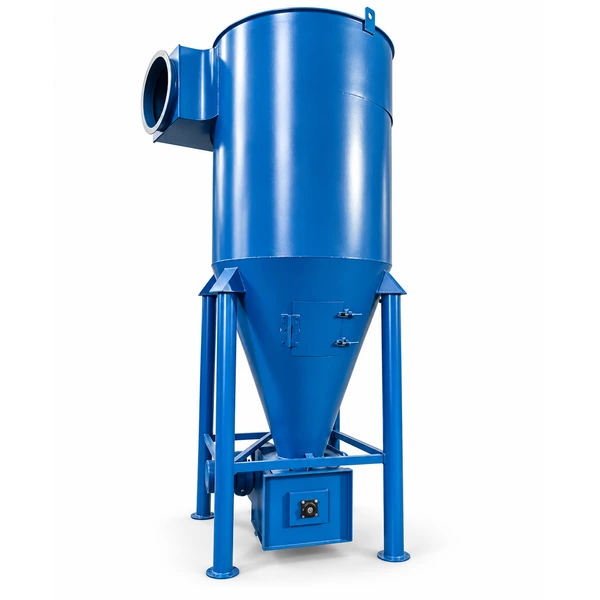
Industrial Cyclone Separator for Dry Particle Removal
A cyclone removes bulk particles by centrifugal action; its efficiency depends on the real particle distribution and gas flow range.
1. No replaceable filter media
Cyclones separate particles using gas speed and particle shape, not bags or cartridges. 2. Suitable for bulk particulate removal
Cyclones are often used as pre-separators before equipment that removes finer dust. 3. Wear zones can be addressed
The inlet, cone, and discharge areas might need stronger materials or replaceable liners if handling abrasive solids. 4. Performance depends on operating range
It’s important to consider gas flow, density, how particles are spread out, and pressure loss all at once.
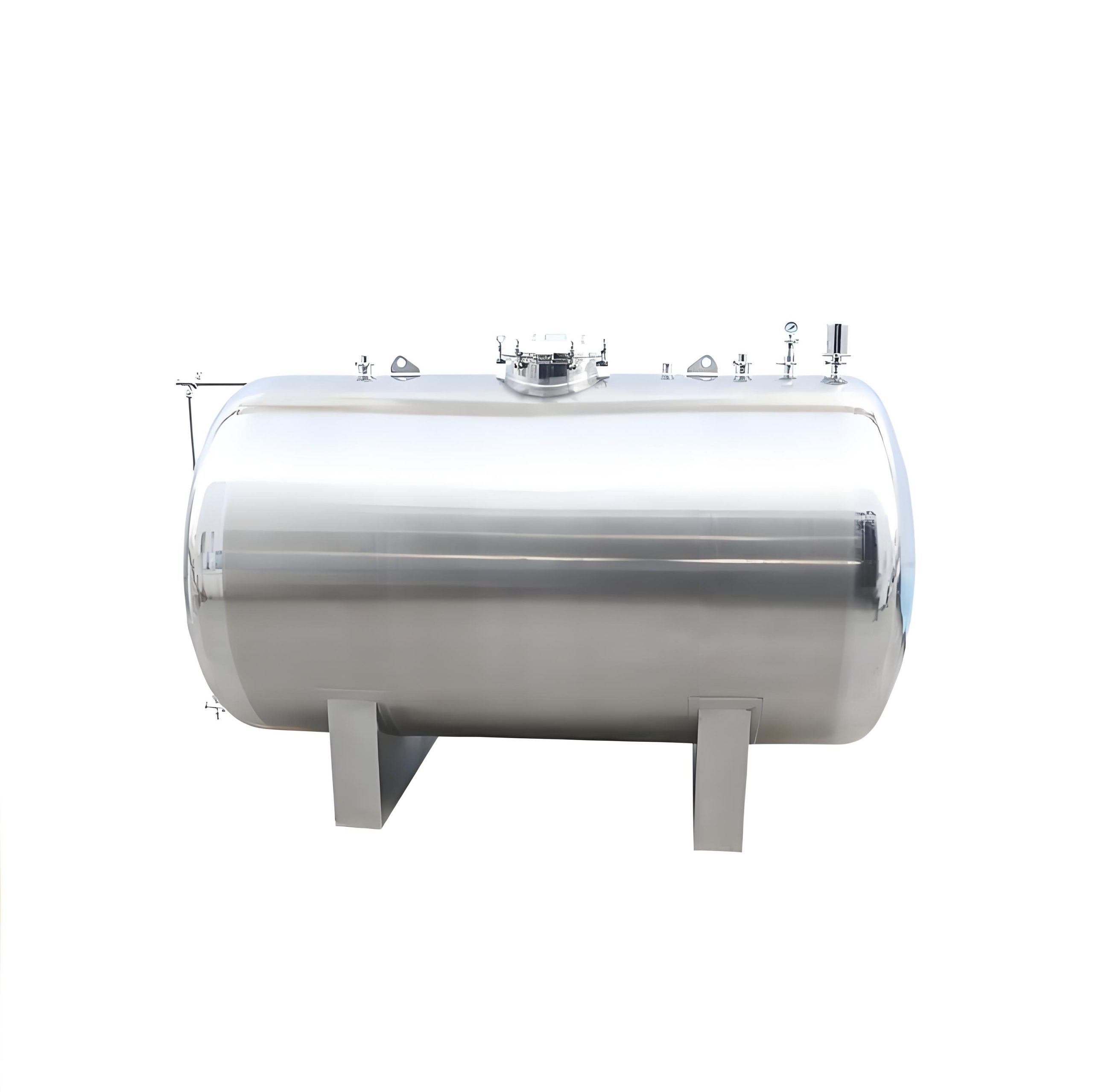
An industrial cyclone separator takes out medium and coarse particles from process air before the air reaches a baghouse or cartridge filter. Its tangential inlet creates a spinning flow that pushes heavier dust, chips, and sparks to the vessel wall and down into the collection hopper. This type of separator works well for woodworking, foundries, metal processing, biomass handling, and bulk material recovery. Since it does not use replaceable filter elements, maintenance is simple and it helps reduce solids buildup and wear on equipment further down the line.
Cyclone Separator Technical Data Sheet
Cyclone Separator Technical Data Sheet
Parameter
Tinsins Typical Manufacturing Range
Unit / Configuration
Gas flow
500–80,000
Nm³/h
Particle-size range
10–1,000
μm
Particle density
Project data required
kg/m³
Typical pressure drop
0.5–2.5
kPa
Dust loading
Project data required
g/Nm³ or kg/h
Calculated cut size
Duty-specific
d50, μm
Operating flow window
Typically 60–110% of design flow
%
Body diameter
300–4,000
mm
Inlet gas velocity
12–25 typical
m/s
Design pressure
Full vacuum to 2.5
MPa
Design temperature
-20 to 600
°C
Separation guarantee
Grade-efficiency curve
%, by particle size
Wear protection
Replaceable liner, hardfacing or increased thickness
Project option
Dust discharge
Rotary valve, double flap or sealed hopper
Interface option
Erosion allowance
Replaceable liner or local reinforcement
mm / material
Support design inputs
Operating, wind, seismic and nozzle loads
Project input
Material
Carbon steel, heat-resistant steel or stainless steel
Project selection
Inspection and test
Dimensional inspection, weld NDE and leak/pressure test
ITP
Applicable design basis
Pressure-vessel code when applicable
Custom fabrication
Required RFQ data
Gas flow, pressure, temperature, composition, density and moisture
Customer input
Review Your Cyclone Separation Duty
Send gas properties, complete particle distribution and solids loading. We will review the manufacturing geometry and wear-control requirements for quotation.
Cyclone Separator for Foundry Sparks and Blasting Media
This separator is used in foundries, fettling shops, and abrasive blasting systems to remove sand, metal particles, and reusable blasting media from the extraction air. It also helps lower the amount of spark-carrying material that reaches downstream dust collectors.
Metalworking Dust Cyclone for Grinding Chips
This cyclone separates grinding dust, metal chips, and other heavy particles made during cutting, polishing, and machining. The collected material drops into the discharge hopper, and the partially cleaned air moves on to the main filtration system.
Industrial Cyclone System for Recycling Material Recovery
This system is used in recycling and waste-processing plants to recover paper pieces, plastic flakes, fibers, and other bulk materials from the conveying air. The cyclone’s shape and wear protection are chosen based on the density and abrasiveness of the particles.
Flue Gas Cyclone Separ
This separator removes coarse ash and solids from hot exhaust gas made by melting, combustion, and thermal-processing equipment. The construction material, internal lining, and expansion features should match the operating temperature and dust properties.and dust characteristics.
Industrial Cyclone Separator Fabrication Video
Average Particle Size Is Misleading
To really understand cyclone performance, look at the whole particle-size distribution. Using just a single D50 value won’t tell you how much fine dust gets through or how particle density affects collection.
Plan for Erosion at the Inlet
Velocity and particle impact are highest near the inlet and cone. Replaceable liners, thicker material, or hardfacing may be justified, but each option affects fabrication and maintenance.